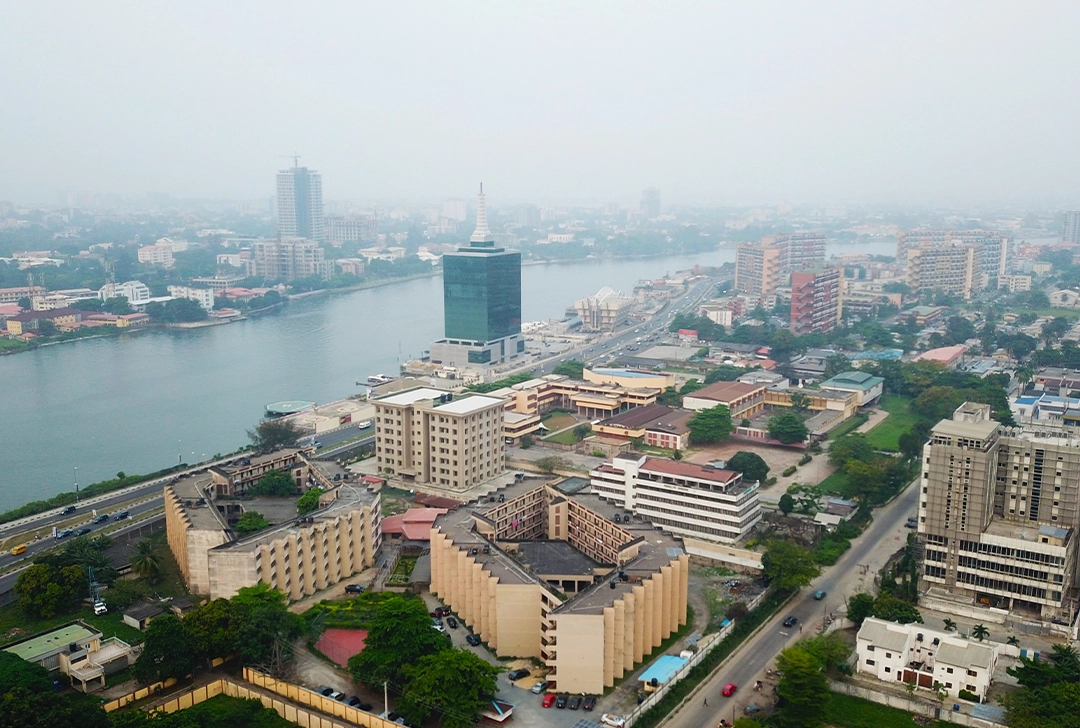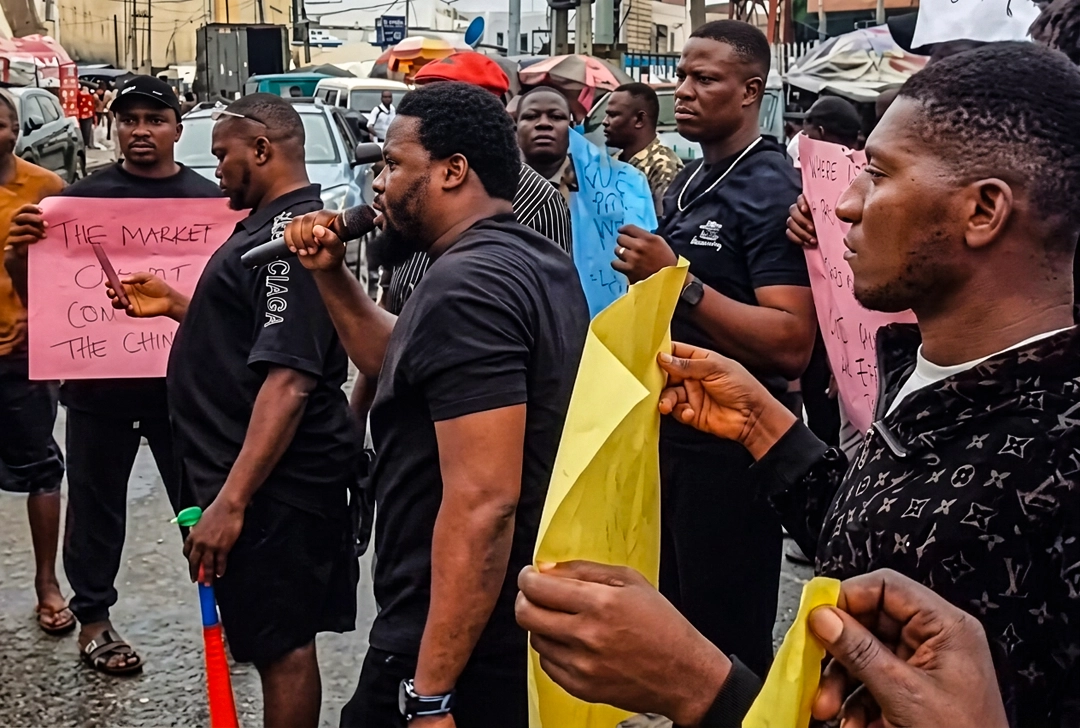

Recent tensions and protests across major commercial hubs such as the Lagos International Trade Fair Complex have brought a deeper structural problem within Nigerian commerce into public view. Indigenous merchants, who have for decades served as the backbone of wholesale and retail distribution across Nigeria and much of West Africa, are increasingly concerned about Chinese manufacturers and traders establishing direct-to-consumer operations within the Nigerian market and bypassing the traditional channels through which local merchants have built their businesses.
Much of the public conversation has understandably focused on competition, foreign businesses, market access, and the question of whether local traders are being displaced by more aggressively positioned foreign competitors. However, viewed from a strategic business and branding perspective, there is another dimension to this conversation that deserves considerably more attention.
The problem is not simply that foreign manufacturers are becoming competitors. The deeper problem is that many local businesses built enormous distribution networks without building brands that they could ultimately own.
This distinction matters because distribution advantages can be replicated, while strong brands, customer relationships, intellectual property, and accumulated brand equity are considerably more difficult to displace.
To understand why many local merchants are feeling the pressure today and what they can do to remain competitive over the next decade, it is necessary to look beyond the immediate protests and examine how the traditional trading model was built in the first place.
1. The Anatomy of a Broken Supply Chain Model
For decades, one of the great strengths of indigenous Nigerian commerce has been the ability to source, distribute, and sell products at remarkable scale. Commercial networks, particularly those associated with Igbo merchant communities, developed sophisticated systems for sourcing goods from Asia, navigating international logistics, clearing products through Nigerian ports, and distributing them through extensive wholesale and retail networks.
These businesses were not successful by accident. They developed deep market knowledge, strong supplier relationships, access to capital, efficient distribution networks, and highly resilient systems of apprenticeship and knowledge transfer, including the well-known Igba Boyi model.
The problem was not that the model was inefficient. In many ways, it was exceptionally efficient. The problem was that much of the value being created remained outside the hands of the distributor.
The merchant could control how a product moved through the market without necessarily owning the product itself. The factory, intellectual property, manufacturing process, product specification, and often the brand identity remained with the overseas manufacturer. The local merchant essentially became the bridge between the manufacturer and the Nigerian consumer.
For a long time, that position was extremely valuable because manufacturers needed the bridge. They needed someone who understood the market, could move large quantities of products, could navigate the complexities of Nigerian distribution, and could get products into the hands of consumers.
But technology, logistics, e-commerce, local warehousing, social commerce, and changing consumer behaviour have gradually weakened the necessity of that bridge.
Once manufacturers and importers began to realize that they could establish local operations, store products closer to the consumer, market directly through digital platforms, and capture a larger portion of the retail margin, the traditional middleman’s position became increasingly vulnerable.
This is the fundamental weakness of a business model built primarily around access to products rather than ownership of products or brands
2. The Consumer Reality: Price Often Beats Sentiment
There is another reality that makes this transition even more difficult for local merchants: consumers ultimately respond to value.
When economic conditions are favourable, consumers may be willing to pay a little more for convenience, familiarity, relationships, or even the satisfaction of supporting a local business. But when inflation is high, purchasing power is under pressure, and households are carefully considering how they spend every naira, price becomes considerably more important.
This does not mean that consumers have stopped caring about local businesses or that loyalty has disappeared. It simply means that economic pressure changes the weight consumers give to different factors when making purchasing decisions.
If one seller can provide essentially the same product at a significantly lower price, the average consumer has a strong financial reason to consider that option, regardless of whether the alternative seller has been part of the market for decades.
This is why blaming foreign competitors for offering lower prices does not fully address the problem. The local merchant may be operating with several layers of costs between the manufacturer and the consumer, while the competitor is increasingly finding ways to shorten that chain.
The result is a structural disadvantage.
A business whose primary competitive advantage is its ability to source and distribute generic products will inevitably face pressure when another player gains access to the same manufacturers, develops a more efficient supply chain, or decides to enter the market directly.
The uncomfortable question therefore becomes: what does the merchant actually own that the manufacturer cannot easily replicate?
If the answer is simply access to a market, the competitive advantage may not be as defensible as it once was.
3. The Strategic Pivot: From Distribution to Brand Ownership
This is where the conversation needs to move beyond protests, competition, and protectionism and toward a much more strategic question: what should Nigerian merchants build next?
The answer is not to abandon distribution. Distribution remains one of the strongest assets many indigenous businesses possess. The opportunity is to build something on top of it.
The strategic shift should be from simply distributing products to developing and owning brands.
A merchant who has spent twenty years understanding what Nigerian consumers want has accumulated something extremely valuable. They have data, relationships, purchasing patterns, customer feedback, product knowledge, supplier relationships, and an intimate understanding of what sells in different markets.
That knowledge can become the foundation for creating proprietary products and brands.
A. From Wholesaler to Private Label Creator
Instead of remaining the anonymous distribution arm of an overseas factory, merchants can use their accumulated market knowledge to develop private-label products that they control.
This could involve creating their own product specifications, developing distinctive packaging, commissioning manufacturers to produce goods under their own brand, registering trademarks, or gradually developing proprietary product lines based on demonstrated consumer demand.
The important difference is that the merchant begins to own something beyond the transaction.
A customer who buys a generic product because it is available can easily switch to another seller offering the same product. A customer who specifically looks for a particular brand has developed a relationship with an asset that the business owns.
That distinction is at the heart of brand equity.
The objective should therefore be to move from being known as the person who sells a particular category of products to becoming the company that owns a recognised name within that category.
4. Cultural Proximity Is a Competitive Advantage
There is another asset that Nigerian businesses already possess but often fail to convert into meaningful brand equity: cultural proximity.
Large international manufacturers may have enormous production capabilities, sophisticated logistics, and significant financial resources, but they do not automatically possess the same understanding of Nigerian consumers that local businesses have developed through years of direct interaction.
Local merchants understand the humour, aspirations, frustrations, preferences, buying habits, and social dynamics that influence purchasing decisions in different parts of the country.
That knowledge is incredibly valuable, but it should not remain informal knowledge exchanged between merchants and customers in physical markets. It can be transformed into a deliberate brand advantage.
A Nigerian brand can create products, campaigns, packaging, customer experiences, and communities that are deeply connected to the realities of its audience. It can understand the cultural references that make people laugh, the language that makes a message feel familiar, and the everyday problems that a product needs to solve.
This does not mean simply putting Nigerian imagery on a package or using local slang in an advertisement. Cultural relevance becomes powerful when it is embedded into the product itself, the customer experience, the communication strategy, and the reason people choose one brand over another.
That is something that cannot easily be copied simply by establishing a warehouse in Nigeria.
5. Distribution Should Become an Ecosystem
The solution is also not to abandon the physical markets that built these businesses.
Nigeria’s major commercial hubs remain incredibly important because they provide something digital platforms cannot completely replace: physical access, relationships, trust, speed, and dense networks of buyers and sellers.
The opportunity is to connect those strengths with the capabilities of the digital economy.
A modern trading business can combine its physical distribution network with social commerce, e-commerce, digital marketing, customer databases, loyalty programmes, direct-to-consumer sales, online fulfilment, and community building.
Instead of simply selling products to whoever walks into the shop, the business can build an identifiable customer base that it can communicate with directly. Instead of relying entirely on marketplace traffic, it can develop its own channels. Instead of competing only on price, it can create reasons for customers to return to a specific brand.
In other words, distribution should no longer be the entire business model. It should become the infrastructure supporting a larger brand ecosystem.
6. The Bigger Lesson for Nigerian Commerce
The tensions surrounding the Trade Fair Complex and other commercial centres should therefore be viewed within a much larger transformation taking place in global commerce.
The traditional trading model was built around the ability to move products efficiently from manufacturers to consumers. That model created enormous wealth and helped establish some of the most influential commercial networks in Nigeria.
But the rules of competition are changing.
Manufacturers are moving closer to consumers. Technology is reducing the friction between production and retail. Digital platforms are making direct commerce easier, while consumers have access to more information and more purchasing options than ever before.
In this environment, simply being an efficient middleman is becoming less defensible.
The businesses that survive and grow will need to own more of the value they create. They will need to turn market knowledge into intellectual property, customer relationships into communities, and distribution networks into platforms for building brands.
This does not mean that every Nigerian trader needs to become a manufacturer. It means that more businesses need to ask a different question about where their long-term value actually comes from.
Are you building a business that depends on access to someone else’s product, or are you building an asset that becomes more valuable because customers know, trust, and actively seek your name?
That distinction could determine which businesses remain relevant as Nigerian commerce continues to evolve.
The future of indigenous commerce will not necessarily belong to the businesses that resist change the longest. It will belong to those that can take the strengths of the old model, combine them with the opportunities of the new economy, and transform distribution expertise into lasting brand equity.
The future belongs to those who own the name on the product, not just the space on the shelf.
Is Your Business Building Value or Just Moving Products?
The market is changing, and businesses that want to remain relevant cannot rely on distribution alone. The next phase of growth will belong to businesses that understand how to turn market knowledge, customer relationships, and commercial expertise into strong, valuable brands.
At IIMAGIN, we help ambitious businesses build the strategy, identity, and communication systems needed to move from being another option in the market to becoming a brand people recognise, trust, and choose.
If your business is ready to build more than a product, let’s talk.