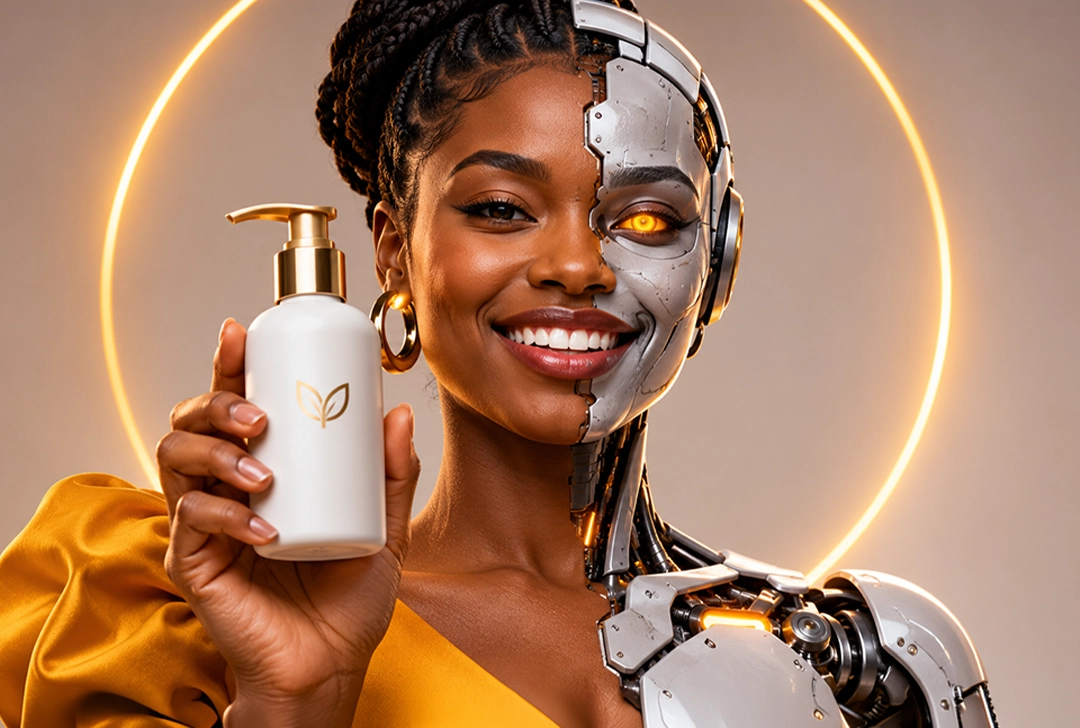

And no, putting a beautifully designed testimonial beside an AI-generated face doesn’t make it social proof.
It makes it fiction. And fiction has no business pretending to be customer experience.
We’re living in an interesting time. AI can generate almost anything: stunning visuals, convincing human faces, realistic conversations, and even testimonials that sound like they came from genuinely satisfied customers.
For businesses trying to build credibility, the temptation is understandable. You want your brand to look established. You want people to see that others are buying, enjoying, and recommending your products or services.
But here’s where I think some brands are getting it terribly wrong.
They’re using AI to manufacture the very thing they should be earning: trust.
And that, in my opinion, is a dangerous branding mistake.
The temptation to look popular
I understand why businesses do it.
You are launching a new product. Your customer base is still growing. You don’t have enough testimonials, professional customer photographs, or impressive reviews to fill your website and social media pages.
Then AI comes along.
Within minutes, you can generate a picture of a happy-looking customer holding your product. You can create a convincing-looking person sitting in your restaurant, enjoying a meal. You can even generate a seemingly authentic customer review to accompany the image.
Everything looks polished. Everything looks believable.
But there is one problem: it didn’t happen.
That person never bought your product. They never visited your restaurant. They never experienced your service. And they certainly never gave you that glowing review.
So, what exactly are you proving?
You’re creating the appearance of customer satisfaction without the actual customer satisfaction.
And that is not social proof.
Social proof is about people, not pictures
The whole idea behind social proof is simple: people are more comfortable making decisions when they see that other people have had positive experiences with a brand.
Think about it.
When you’re considering a restaurant, you probably want to see what actual customers are saying. When you’re buying a product online, you look for reviews, customer photographs, and genuine recommendations.
Why?
Because you’re looking for reassurance that your money, time, and expectations are in safe hands.
Social proof works because it reduces uncertainty. It gives prospective customers a reason to believe that someone else has already taken the risk and had a worthwhile experience.
But when you replace real customers with AI-generated faces and fabricated testimonials, you’re removing the very foundation of social proof: authenticity.
A beautiful picture might attract attention, but it cannot establish a genuine customer experience.
And the difference matters.
The numbers suggest that customers are paying attention
This isn’t just a personal opinion. Research gives us some interesting reasons to take customer authenticity seriously.
According to BrightLocal’s 2026 Local Consumer Review Survey:
- 97% of consumers read online reviews for local businesses.
- 85% are more likely to use a business after reading positive reviews.
- 77% say negative reviews deter them from using a business.
- 97% believe businesses should face some form of punishment for fake reviews. BrightLocal+2
Think about those numbers for a moment.
People are actively looking for other people’s experiences before deciding whether to trust your business. And they also expect accountability when businesses manipulate that experience.
There’s also an interesting academic study worth mentioning.
A September 2024 research paper published in Telematics and Informatics, titled Consumer Reactions to Perceived Undisclosed ChatGPT Usage in an Online Review Context, examined how consumers responded to reviews believed to have been generated by ChatGPT.
The researchers, Clinton Amos and Lixuan Zhang, found that compared with human-written reviews, ChatGPT-generated reviews were perceived as less useful, less trustworthy, and less authentic. ScienceDirect+1
In other words, the issue isn’t simply whether AI can write a convincing testimonial. It’s whether people believe what they’re reading.
And that’s a much bigger problem for brands.
You might win attention but lose credibility
Here’s something I think business owners need to understand: customers are not just buying your products or services. They’re also buying into the confidence that your brand creates.
When someone discovers that your supposedly happy customers don’t exist, the damage might extend beyond that particular testimonial.
They may begin questioning everything else.
Are your product photographs real? Are your results genuine? Are your customer numbers accurate? Are your success stories fabricated too?
One questionable marketing decision can create a credibility problem that affects the entire brand.
And the irony is that you might have a genuinely good product, an excellent service, and real customers who are happy with you. Yet you’ve chosen to manufacture evidence instead of showcasing the evidence you already have.
That’s a terrible trade-off.
Why fake a reputation when you could be building one?
There is also a growing regulatory dimension to this issue. In the United States, the Federal Trade Commission introduced a rule that took effect on October 21, 2024, prohibiting fake or false reviews and testimonials, including those attributed to nonexistent people or people without actual experience with the product or service. Federal Trade Commission+1
This is a US regulation, not a blanket Nigerian legal requirement, but it reinforces an important point: fake customer validation is increasingly being treated as a serious matter.
So, what should brands do instead?
I’m not suggesting that brands should abandon AI. Far from it.
AI is an incredible tool. It can help you develop better campaigns, create compelling visuals, improve your communication, analyze customer feedback, and make your marketing more efficient.
But there’s a difference between using AI to communicate your value and using it to invent evidence of that value.
Here are a few things I believe brands should prioritize:
1. Show real customers, not AI-generated customers.
If a customer genuinely enjoys your product, ask for permission to share their photograph, video, or experience. A real customer doesn’t need to look like a professional model to make a powerful impression.
2. Share genuine customer conversations.
Screenshots of actual feedback, WhatsApp messages, emails, and social media comments can be incredibly powerful. Just ensure you have permission and protect private information.
3. Encourage video testimonials.
Let customers speak in their own words. Don’t over-script them or force them to sound like brand ambassadors. Sometimes, an honest, unscripted 20-second video can communicate more than an elaborate advertising campaign.
4. Be transparent with your numbers.
If you’ve served 50 customers, say 50. If you’ve completed 12 projects, say 12. You don’t need to pretend you’ve served thousands to appear credible.
5. Give your customers a reason to talk about you.
Ultimately, the best social proof comes from a good customer experience. Invest in your product, service delivery, customer relationships, and after-sales support. Make people genuinely want to recommend you.
Your brand doesn’t need fake applause
I think one of the biggest mistakes a business can make is becoming so obsessed with looking successful that it forgets to actually build something worth celebrating.
You don’t need AI-generated people pretending to love your brand.
You need real people who genuinely do.
You don’t need 100 fabricated testimonials. You need five honest customers whose experiences can convince the next 50 people to give you a chance.
And if you’re a new business with no testimonials yet? That’s perfectly fine. Start building relationships. Deliver value. Ask for feedback. Let your reputation grow alongside your business.
Don’t manufacture popularity just because you’re uncomfortable with being a work in progress.
Remember, your brand’s reputation is not built by how many people you can make appear to love it. It’s built by how many people genuinely do.
Use AI to tell your story. Use AI to make your marketing better. Use AI to communicate more effectively.
But please, don’t use it to invent the people who supposedly believe in you.
Because when it comes to branding, looking trusted and being trusted are two very different things.
And I’d choose the latter every single time.
What do you think? Is using AI-generated people for customer testimonials harmless marketing creativity, or is it a shortcut that puts brand credibility at risk?
I’d genuinely love to hear your thoughts.