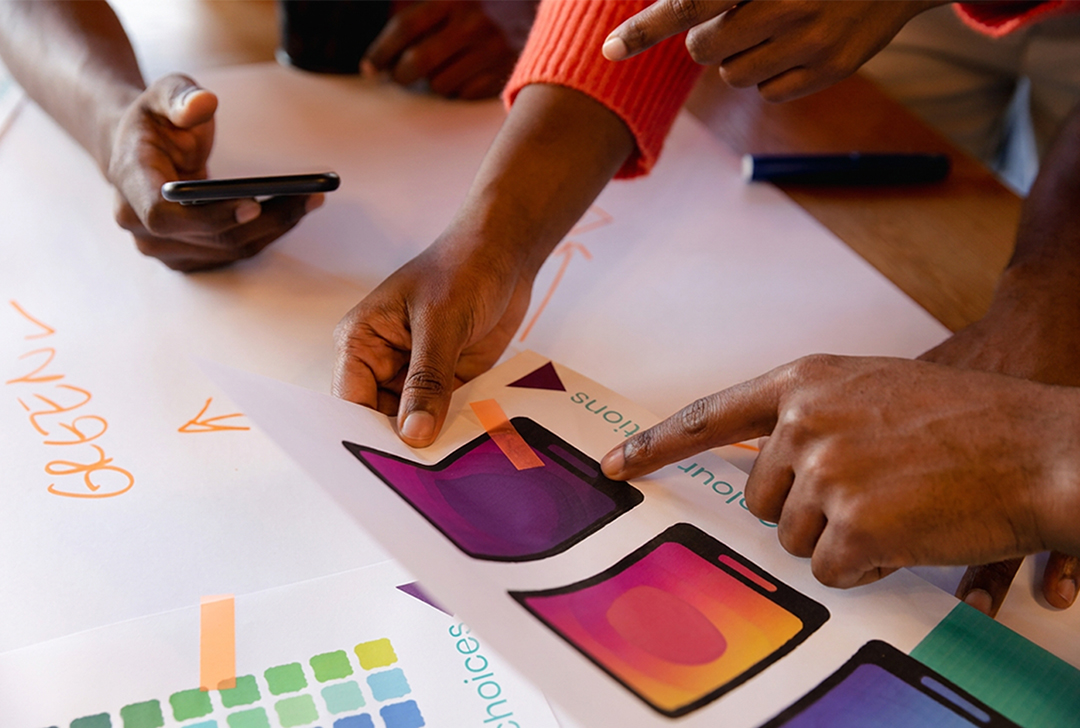

There is a moment that happens in almost every growing business. At some point, the company begins to feel different from the way it looks. Perhaps the business has grown, its customers have changed, the market has become more competitive, or the founder simply realises that the identity no longer reflects the quality of what has been built. The conversation that follows is usually familiar: We need a new logo. We need to rebrand.
And so the search for a new logo begins.
Colours are explored. Fonts are tested. Mood boards are created. A new identity is presented, approved and eventually rolled out across the website, social media and business materials. There is a sense of renewal. The company looks different, and because it looks different, it can be tempting to believe that the brand has changed.
But a visual identity and a brand are not the same thing.
A logo is something the business controls. A brand is something the market ultimately decides
A logo is an important part of how a business identifies itself, but it is only one expression of a much larger idea. Your brand is the meaning people attach to your business. It is the impression they form when they encounter you, the expectations they develop before buying from you and the memory they carry after they have interacted with you.
In other words, a logo is something the business controls. A brand is something the market ultimately decides.
This distinction explains why businesses with beautifully designed identities can still struggle to build strong brands. Good design can create attention and recognition, but it cannot, by itself, create trust, preference or reputation. Those things are built through repeated experiences.
Think about the brands you trust most. You probably recognise their logos immediately, but the logo itself is unlikely to be the reason you trust them. Your confidence has been built through a combination of things: what they consistently promise, how they communicate, how they behave, the quality of what they deliver and the experiences you have had with them over time. The visual identity helps make the brand recognisable, but the experiences give that identity meaning.
This is why branding is ultimately a business question before it becomes a design question.
Before asking what a brand should look like, a business needs to understand what it wants to mean. Who is it trying to serve? What does it want to be known for? What problem does it solve particularly well? What makes it different from the alternatives? Why should people believe its claims? And when someone thinks about the company a year from now, what should immediately come to mind?

These are not design questions. They are strategic questions.
The answers to them should eventually influence the design, but they should also influence almost everything else: the way the company speaks, the kind of content it produces, the customers it targets, the experience it creates, the promises it makes and even the products and services it chooses to offer.
This is where many rebrands go wrong. The company changes its appearance without changing or clarifying the thinking underneath it.
The result may be a more attractive business, but not necessarily a more meaningful one.
A company can look premium and still deliver an ordinary experience. It can describe itself as innovative while behaving exactly like everyone else in its category. It can claim to be customer-focused while making customers work unnecessarily hard to get answers. It can invest heavily in a sophisticated identity while its communication remains vague and its positioning remains unclear.
Eventually, the contradiction becomes visible.
The problem is not that the branding was poorly designed. The problem is that the business has created a promise that its experience does not consistently support.
This is why the strongest brands tend to have a certain coherence about them. Their identity, communication and behaviour seem to belong to the same company. What they say makes sense alongside what they do. The experience feels consistent with the promise. The visual identity reinforces the positioning rather than simply decorating it.
Consider a property company. On the surface, its product might be land, apartments or houses. But the customer is rarely buying square metres alone. They may be buying security, status, convenience, investment potential, family stability or the possibility of a particular lifestyle. The physical property is the product, but the meaning surrounding that product can have enormous influence on the decision.
The same principle applies in almost every category. A financial company is not simply selling financial products; it is asking people to trust it with their money. A technology company is not simply selling software; it is promising a better way of working. A hospitality company is not simply selling accommodation; it is selling an experience. A professional services firm is not simply selling expertise; it is asking a client to believe that placing an important problem in its hands will lead to a better outcome.
Branding helps make that value understandable.
This is why a strong brand can become one of the most valuable assets a business owns. When people understand what you stand for, recognise what makes you different and have enough positive experiences to believe your promise, choosing you becomes easier.
But that process takes time.
You cannot redesign your way into credibility. You cannot choose a colour that makes customers trust you. You cannot create a tagline that substitutes for a good experience. And you certainly cannot build a meaningful brand by treating branding as a cosmetic exercise that begins and ends with a logo.
Good branding does not make a mediocre business look better than it is. At its best, it makes the value of a good business easier for the market to see.
That distinction is important.
If your product is poor, branding will not save it. If your service is unreliable, a new identity will only delay the problem. If your positioning is unclear, a more beautiful website may simply make the confusion more attractive.
But if the business has genuine value and the market is struggling to understand it, branding can make an enormous difference.
It can give the business clarity. It can create distinction in a crowded category. It can make the right customers recognise themselves in the story. It can turn a collection of products and services into something with meaning. And over time, it can help transform familiarity into trust and trust into preference.
So, when a business says it needs to “work on its brand,” the first question should probably not be, What should the new logo look like?
A better question is: What do we want people to believe about this business, and are we giving them enough reasons to believe it?
The logo still matters. The website matters. The colours, photography, typography and advertising all matter. But they matter because they are expressions of the brand, not because they are the brand itself.
Your brand is not what you designed.
It is what people come to believe, feel and remember about your business.
And that is built through far more than design.